
Endurance Assessment
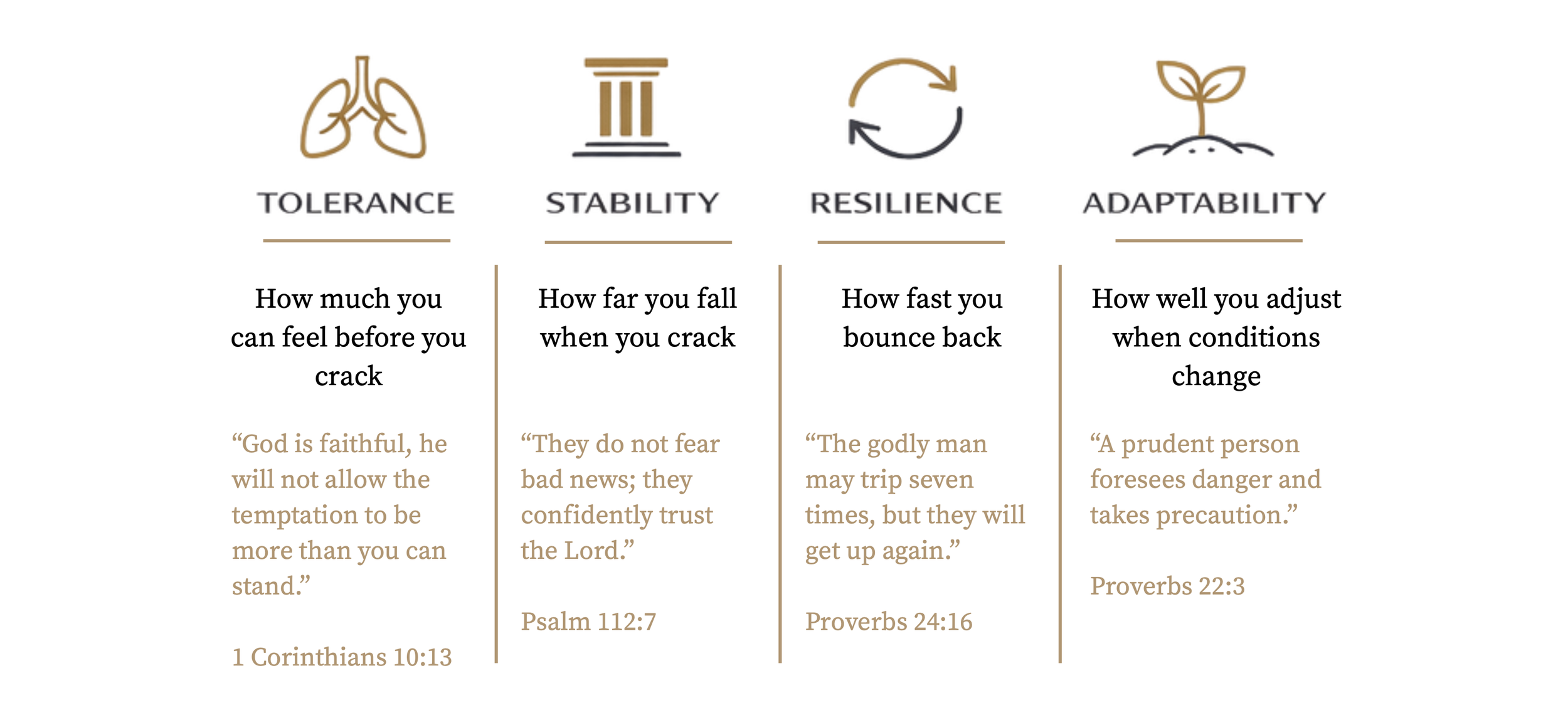
This assessment measures your current capacity to stay present with discomfort and recover from setbacks without spiraling into unhealthy patterns. It identifies your endurance level (low, medium, or high) across 4 categories, or “skills,” and provides grounded, personalized guidance on exactly what to focus on next to build lasting emotional resilience.
“Endurance is built by how we choose to respond to pain, not by avoiding it.”
Provide Feedback Here
Please review your profile results below before providing feedback. Thank you.
YOUR ENDURANCE SKILLS PROFILE
UNDERSTANDING YOUR RESULTS
Your endurance scores are a snapshot of your current nervous system. Shaped by years of experience and how you've responded to pain. They're not a measure of your worth. Low scores show where growth is most needed. High scores invite you to steward what you've built.
Most people score unevenly across the four skills. This is completely normal.
HOW TO USE THESE RESULTS:
Start with your lowest score—that's your primary growth edge.
Choose ONE practice from that skill to begin this week.
Tell someone safe about your one commitment.
Reassess every 90 days to track progress.
Endurance is built through small, repeated actions over time. Be patient. Be consistent. Be kind to yourself.
Participation > Perfection
LOW - TOLERANCE
INTRO
SCORE: 4 - 11
This score means your nervous system is working in survival mode. When discomfort shows up—stress, loneliness, boredom, or sexual urges—your body pushes for relief fast and skips the “thinking part.” That’s not a character flaw. It’s a capacity gap, and capacity can be built.
WHAT’S HAPPENING RIGHT NOW
This score means your nervous system is working in survival mode. When discomfort shows up—stress, loneliness, boredom, or sexual urges—your body pushes for relief fast and skips the “thinking part.” That’s not a character flaw. It’s a capacity gap, and capacity can be built.
WHAT GROWTH LOOKS LIKE
You learn in your body that discomfort isn’t dangerous. You can feel mild discomfort and stay present without escaping.
WHAT TO DO NEXT (ACTIONS)
• Sit with mild discomfort 2–5 minutes daily (timer, no fixing)
• Use a 10-minute delay during urges (no decisions)
• Lower baseline stimulation (get good sleep, no caffeine after noon, no screens 1 hour before bed)
MODERATE - TOLERANCE
INTRO
SCORE: 12 - 17
You’ve built real capacity. You can stay present with hard feelings sometimes, but consistency is still fragile—especially under sustained pressure. The goal now is refinement: respond earlier and build steadier endurance.
WHAT’S HAPPENING RIGHT NOW
You can tolerate discomfort for a while, but long stress makes urges louder and harder to redirect.
WHAT GROWTH LOOKS LIKE
You notice discomfort sooner and can stay present longer before reacting. Urges lose urgency.
WHAT TO DO NEXT (ACTIONS)
• Respond when discomfort first appears (catch it as a whisper)
• Practice tolerating moderate discomfort (boredom, frustration) without escaping
• Name sensations you experience in your body (tight chest, restlessness) instead of spinning stories
HIGH - TOLERANCE
INTRO
SCORE: 18 - 20
You’ve developed lasting capacity. Discomfort doesn’t automatically control you. Growth now is about stewardship: protecting rhythms, noticing subtle drift, and staying connected so endurance remains strong across seasons.
WHAT’S HAPPENING RIGHT NOW
Discomfort is manageable; avoidance, if present, tends to be subtle (busyness, distraction, numbing).
WHAT GROWTH LOOKS LIKE
Sustained emotional presence across stress levels with minimal reactivity and broader emotional range.
WHAT TO DO NEXT (ACTIONS)
• Watch for quiet avoidance (busyness, emotional flatness)
• Protect rest and reflection rhythms
• Slow down intentionally, especially when life is full
LOW - STABILITY
INTRO
SCORE: 4 - 11
When endurance is low, stress can feel bigger than your capacity to hold it—like carrying 50 pounds when you can currently lift 30. The work here is not perfection. It’s making reactions smaller and building grounded day-to-day stability.
WHAT’S HAPPENING RIGHT NOW
Stress causes big drops. Small triggers can lead to emotional crashes, agitation, or shutdown. It’s hard to stay steady when pressure hits.
WHAT GROWTH LOOKS LIKE
Reactions are still real, but smaller and shorter. You feel more grounded day to day and less easily derailed.
WHAT TO DO NEXT (ACTIONS)
• Identify top destabilizers (sleep, hunger, isolation)
• Build one daily anchor (walk, fixed wake time, check-in with trusted friend)
• Regulate the body first (slow inhale/exhale, unclench jaw/hands)
MODERATE - STABILITY
INTRO
SCORE: 12 - 17
You’re no longer collapsing at the first sign of discomfort, but under sustained stress you may drift or lose steadiness. The focus now is consistency under pressure—keep the scaffolding while you’re still building.
WHAT’S HAPPENING RIGHT NOW
You can stay steady initially, but stability fades over time when stress lasts days or weeks.
WHAT GROWTH LOOKS LIKE
Steadier regulation across moderate stress with faster return to baseline and fewer big drops.
WHAT TO DO NEXT (ACTIONS)
• Tighten daily rhythms (sleep, movement, check-ins)
• Reduce expectations during high-stress seasons
• Simplify your day when activated instead of pushing harder
HIGH - STABILITY
INTRO
SCORE: 18 - 20
You’re no longer collapsing at the first sign of discomfort, but under sustained stress you may drift or lose steadiness. The focus now is consistency under pressure—keep the scaffolding while you’re still building.
WHAT’S HAPPENING RIGHT NOW
You can stay steady initially, but stability fades over time when stress lasts days or weeks.
WHAT GROWTH LOOKS LIKE
Steadier regulation across moderate stress with faster return to baseline and fewer big drops.
WHAT TO DO NEXT (ACTIONS)
• Tighten daily rhythms (sleep, movement, check-ins)
• Reduce expectations during high-stress seasons
• Simplify your day when activated instead of pushing harder
LOW - RESILIENCE
INTRO
SCORE: 4 - 11
Low endurance is often less about the fall and more about what happens after it. Shame can keep you stuck longer than the behavior. The goal here is simple: re-enter quickly and stay connected.
WHAT’S HAPPENING RIGHT NOW
Setbacks lead to shame spirals, isolation, and delayed re-engagement. It’s hard to get back on track.
WHAT GROWTH LOOKS LIKE
You re-engage within 24–48 hours—even if you don’t feel ready. Shame becomes shorter and less convincing.
WHAT TO DO NEXT (ACTIONS)
• 24-hour re-entry rule (re-engage within a day)
• Write a post-slip (relapse) reset plan/script
• Reach out to someone safe earlier than feels necessary
MODERATE - RESILIENCE
INTRO
SCORE: 12 - 17
You recover and get back on track eventually, but you want that recovery time to shorten. At this stage, measure progress by how fast you return—not by whether you ever struggle.
WHAT’S HAPPENING RIGHT NOW
You get back on track, but discouragement or shame slows you down. Setbacks interrupt momentum longer than you want.
WHAT GROWTH LOOKS LIKE
Faster re-engagement with less emotional crash. Shorter shame time and quicker return to connection.
WHAT TO DO NEXT (ACTIONS)
• Track “speed of return” after setbacks (hours vs days)
• Interrupt shame with truth (“this doesn’t define me”)
• Reconnect before isolation sets in
HIGH - RESILIENCE
INTRO
SCORE: 18 - 20
You’ve built something real: setbacks don’t hijack your identity or direction. Steward the system—stay humble, connected, and honest so resilience remains strong over time.
WHAT’S HAPPENING RIGHT NOW
Missteps are contained and processed quickly; you return to healthy rhythms without extended withdrawal.
WHAT GROWTH LOOKS LIKE
Rapid emotional recovery and consistent re-engagement with adaptive behaviors.
WHAT TO DO NEXT (ACTIONS)
• Reassess every 60–90 days
• Maintain support systems (don’t drift)
• Normalize imperfection and course-correct early
LOW - ADAPTABILITY
INTRO
SCORE: 4 - 11
When endurance is low, struggle can feel discouraging instead of informative. The shift you’re building is moving from self-criticism to curiosity—so difficulty starts teaching you instead of trapping you.
WHAT’S HAPPENING RIGHT NOW
Patterns repeat. Setbacks feel defeating, and you may not know what to change next.
WHAT GROWTH LOOKS LIKE
You begin extracting learning from struggle. Patterns become visible, and small adjustments become possible.
WHAT TO DO NEXT (ACTIONS)
• After setbacks ask: “What did this reveal?”
• Track triggers/conditions (time, emotion, situation)
• Improve one variable at a time (sleep, support, boundaries)
MODERATE - ADAPTABILITY
INTRO
SCORE: 12 - 17
You’re in the middle of growth: you’re gaining insight, but applying it under stress is still inconsistent. The work now is turning insight into earlier, repeatable adjustments.
WHAT’S HAPPENING RIGHT NOW
You learn, but under pressure you fall back into old strategies. Insight doesn’t always become action.
WHAT GROWTH LOOKS LIKE
Earlier and more consistent course correction based on what you’re learning.
WHAT TO DO NEXT (ACTIONS)
• Do 5-minute pattern mapping after setbacks
• Review your strategy monthly
• Set responsive goals (adjustments, not rigid ideals)
HIGH - ADAPTABILITY
INTRO
SCORE: 18 - 20
At high endurance, struggle tends to produce wisdom. The focus now is integration and longevity—keeping your life congruent and flexible across seasons, without rigidity or drift.
WHAT’S HAPPENING RIGHT NOW
At high endurance, struggle tends to produce wisdom. The focus now is integration and longevity—keeping your life congruent and flexible across seasons, without rigidity or drift.
WHAT GROWTH LOOKS LIKE
Compounding growth with flexible strategy evolution and increasing wisdom.
WHAT TO DO NEXT (ACTIONS)
• Keep reflective rhythms (journaling, prayer, review)
• Stay open to feedback and accountability
• Watch rigidity disguised as discipline